
The Social Uses of Respectability
The Tenant of Wildfell HallCharacters invoke respectability to defend, condemn, or control one another, while the novel repeatedly separates outward standing from actual moral conduct.
increasing Bearing strength in each event
 decreasing
Bearing strength in each eventdecreasingRespectability as Local Currency
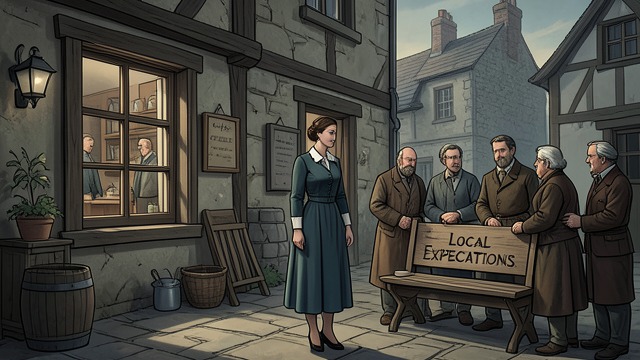
Respectability as Local Currency
Appearances counted
The villagers assess Helen through her clothing, household, child, and willingness to socialize. Those visible signs matter more to them than the unseen circumstances of her marriage.
Reputation policed
Their judgment shows respectability functioning as a social currency that women can lose without evidence. A quiet household becomes suspicious simply because it does not follow local expectations.
The Vicar’s Standard

The Vicar’s Standard
A public moral voice
Michael Millward presents his criticism of Helen as pastoral responsibility. His certainty relies partly on what others say, despite the lack of a verified account.
Respectability mistaken for virtue
He assumes that conventional conduct is a reliable measure of moral character. Helen’s refusal to submit quietly makes her appear more guilty in his eyes, even though it is his judgment that lacks care.
Gentlemen and Their Excuses

Gentlemen and Their Excuses
Conduct treated as amusement
Arthur Huntingdon’s excesses and the men’s rowdy behaviour are often excused as the pleasures of gentlemen. The same circle condemns restraint as dull or feminine.
Moral standards inverted
Women are expected to preserve the household’s respectability while men’s conduct is treated as private sport. The gap between reputation and behaviour exposes the gendered rules supporting male privilege.
Helen’s Social Exile

Helen’s Social Exile
A respectable woman excluded
Although Helen acts to protect her son, the community regards her as a possible sexual transgressor. Her decision to leave becomes evidence against her because it breaks the expected form of marriage.
Integrity without approval
Helen continues to care for her child and earn an honest living, regardless of whether the neighbours approve. The novel treats her conduct, rather than their verdict, as the meaningful measure of her character.
A Public Life Rebuilt

A Public Life Rebuilt
Security replaces concealment
Helen returns to a more public family life once Arthur Huntingdon is dead and she has financial security. She no longer has to construct her identity around evasion.
Respectability redefined
Her later standing follows from truth, work, and chosen companionship rather than obedience to an abusive husband. The novel invites readers to reconsider who deserves respect and why.
Autumn 1827
Early summer 1828
During the gatherings at Grassdale
After her flight to Wildfell Hall
After Helen’s inheritance and marriage
